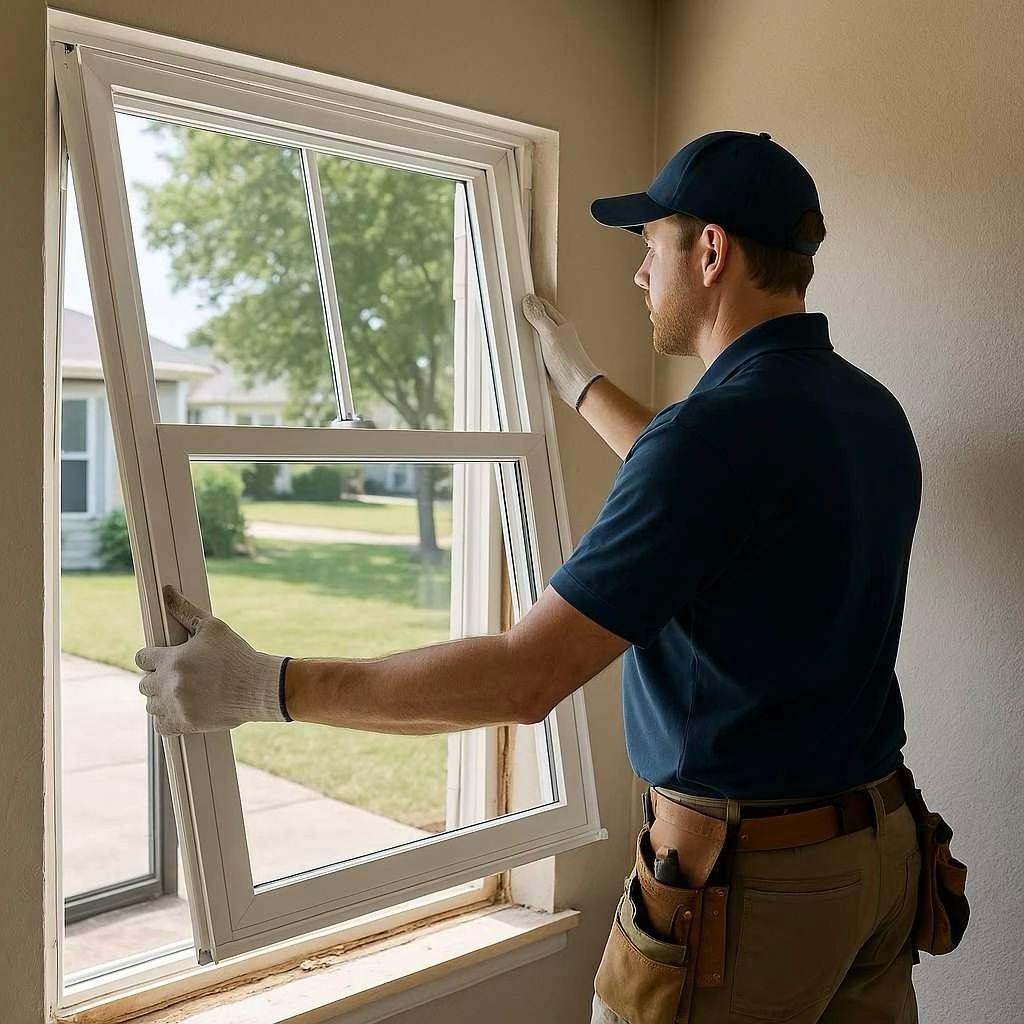
How to decide between whole-home window replacement and replacing windows in phases
When several windows in a home are aging, drafty, difficult to operate, or visibly damaged, homeowners often face an important question: should every window be replaced at the same time, or is it better to replace only the worst windows first?
There is no single answer for every property. Replacing all windows at once can provide a more consistent appearance, simplify installation, and address widespread performance problems in one project. A phased approach can make sense when only a few windows are failing, the budget is limited, or different parts of the home have windows of different ages and conditions.
The best decision starts with the condition of the existing windows, the goals for the project, the home’s construction, and the homeowner’s budget.
Why Homeowners Consider Replacing All Windows at Once
Windows often age at a similar rate when they were installed during the same construction or renovation. If one window begins showing signs of wear, others may not be far behind.
Common reasons for whole-home replacement include
- Multiple windows have drafts or air leaks.
- Several frames or sashes show deterioration.
- Windows are difficult to open, close, or lock.
- Glass units are fogging or showing seal problems.
- The homeowner wants a consistent exterior appearance.
- Energy performance is a major concern.
- A large renovation is already underway.
- The homeowner wants to avoid scheduling several separate installation projects.
The Advantages of Replacing All Windows at Once
1. A consistent appearance
Replacing windows together makes it easier to keep frame profiles, colors, grid patterns, glass options, and operating styles consistent throughout the home.
This can be especially important when windows are visible together on the same elevation.
2. One installation project
A whole-home project typically means one planning process, one installation period, and one overall cleanup rather than repeated disruptions over several years.
3. More consistent performance
When all aging windows are replaced, the home is not left with a mixture of newer high-performing units and older windows that may continue to leak air or allow unwanted heat transfer.
4. Easier planning
A single project allows the homeowner and contractor to evaluate the house as a complete system rather than making isolated decisions one room at a time.
5. Potential project efficiencies
Larger projects may create efficiencies in measuring, ordering, mobilization, installation, and project management. Actual pricing depends on the contractor, product, opening conditions, and scope.
The Disadvantages of Replacing All Windows at Once
Higher upfront cost
The most obvious disadvantage is the larger initial investment. Even when a whole-home project is efficient, purchasing and installing many windows at once requires more immediate funding.
More work happening at one time
A large replacement project can temporarily affect several rooms. Homeowners may need to move furniture, remove window treatments, secure pets, and prepare access around multiple openings.
Not every window may need replacement
If some windows are relatively new and functioning properly, replacing them only for uniformity may not be necessary.
When Replacing Windows in Phases Makes Sense
A phased approach divides the project into smaller groups.
Phasing may be practical when
- Only a few windows have significant problems.
- The home contains windows installed at different times.
- Budget limitations make a full replacement impractical.
- One side of the home receives substantially more weather exposure.
- A remodel affects only part of the property.
- The homeowner wants to prioritize bedrooms, living areas, or other important spaces first.
The Advantages of Phased Window Replacement
Lower immediate cost
Replacing fewer windows at one time reduces the amount that must be paid or financed at the beginning of the project.
Ability to prioritize urgent problems
Damaged, leaking, difficult-to-lock, or badly deteriorated windows can be addressed first.
Flexibility
Homeowners can coordinate future phases with remodeling, painting, siding, or other home-improvement work.
Potential Drawbacks of Replacing Windows in Phases
Matching products later
Manufacturers can update product lines, colors, hardware, glass packages, and grid options. A window purchased several years later may not match the original replacement exactly.
Repeated installation disruption
Each phase may require new scheduling, preparation, access, and cleanup.
Older windows remain
Replacing the worst windows first means the remaining older units continue to perform as they did before.
Potential differences in appearance
New and old windows can look noticeably different when viewed from the exterior or from adjacent rooms.
Start With a Window-by-Window Condition Assessment
Before deciding on the project size, inspect each window rather than assuming every unit has the same problem.
Look for
- Drafts around the frame or sash.
- Difficulty opening or closing.
- Locks that do not engage correctly.
- Rot, corrosion, cracking, or other frame damage.
- Water staining around the opening.
- Condensation or fogging between panes.
- Loose or damaged components.
- Visible gaps around the window.
- Excessive exterior noise compared with other windows.
Drafts: Repair or Replace?
A draft does not automatically mean the entire window must be replaced. Air leakage can sometimes come from worn weatherstripping, failed caulk, installation gaps, or surrounding construction.
A professional evaluation can help determine whether maintenance, repair, or replacement is the appropriate solution.
Fogging Between Glass Panes
Condensation between panes in an insulated glass unit can indicate that the sealed glass assembly has failed.
Depending on the window design, age, warranty, and availability of parts, glass replacement or full window replacement may be considered.
Windows That Are Difficult to Operate
A window that sticks, will not remain open, or does not lock correctly deserves attention.
Possible causes include
- Worn hardware.
- Balance-system problems.
- Frame movement.
- Paint buildup.
- Swelling or deterioration.
- Improper installation.
- Damaged components.
Operational problems should be evaluated before deciding whether replacement is necessary.
Water Intrusion Requires Careful Diagnosis
Water around a window can come from the window itself, installation details, flashing, sealants, siding, roofing, or other parts of the building envelope.
Replacing a window without identifying the source of the water can leave the underlying problem unresolved.
Consider the Age of the Windows
Age alone does not determine whether a window needs replacement, but it provides useful context.
If most of the windows were installed together and several are developing similar problems, a whole-home replacement may be more practical than repeatedly repairing or replacing individual units.
Consider Energy Performance
Windows affect heat transfer, solar heat gain, air leakage, comfort, and HVAC demand.
When comparing replacement products, homeowners can review performance ratings appropriate for their climate and project.
Common performance information includes
- U-factor.
- Solar Heat Gain Coefficient.
- Visible transmittance.
- Air leakage ratings where provided.
- ENERGY STAR certification where applicable.
Actual energy savings vary based on climate, existing windows, installation quality, home construction, HVAC systems, shading, and occupant behavior.
Why Installation Quality Matters
A high-quality window can underperform if it is installed incorrectly.
Proper installation should address
- Correct sizing.
- Level and square placement.
- Secure attachment.
- Water management.
- Flashing as appropriate for the opening.
- Air sealing.
- Exterior and interior finishing.
Installation requirements vary by product, wall construction, and local building requirements.
Consider Comfort, Not Only Utility Bills
Homeowners often replace windows for comfort as much as for energy savings.
Potential comfort improvements may include
- Reduced drafts.
- More consistent interior temperatures.
- Reduced solar heat gain with appropriate glass.
- Improved operation.
- Better control of outside noise, depending on the window system.
Think About Exterior Appearance
Windows are a major architectural feature.
If several mismatched windows are replaced over many years, differences in frame width, color, grids, screens, and glass appearance may become noticeable.
Whole-home replacement makes visual consistency easier to manage.
Think About Interior Appearance
Interior frame colors, trim, hardware, and sightlines can also affect the look of a room.
Homeowners planning interior renovations may prefer to coordinate window replacement with painting, trim work, or other finish updates.
Consider Window Style Changes
Replacement is an opportunity to reconsider how certain openings operate.
Common window styles include
- Single-hung.
- Double-hung.
- Casement.
- Awning.
- Sliding.
- Picture or fixed windows.
- Specialty shapes.
Changing style can affect ventilation, egress, appearance, structure, and code requirements, so the opening should be evaluated carefully.
Safety and Egress Considerations
Some bedroom windows and other openings may be subject to emergency escape and rescue requirements. Safety glazing may also be required in certain locations.
Local building codes and product requirements should be reviewed before changing window size, style, or configuration.
Impact-Resistant and Storm Considerations
In areas exposed to hurricanes or severe storms, homeowners may consider impact-resistant window systems or other approved opening-protection strategies.
Requirements vary by jurisdiction, building location, product approval, and project scope. A qualified contractor can help identify applicable requirements.
Should You Replace Good Windows Just to Match?
Not necessarily.
If a window is in good condition, operates properly, and meets the homeowner’s needs, replacing it solely for uniformity is a personal and budget decision.
However, homeowners should consider whether matching the same product later may be difficult.
Prioritizing Windows When You Cannot Replace Them All
Priority 1: Safety or security concerns
Address windows that do not lock, have damaged glass, or create other immediate safety concerns.
Priority 2: Active water problems
Investigate openings associated with water intrusion promptly.
Priority 3: Severe deterioration
Frames or components with significant damage should be evaluated.
Priority 4: Major comfort problems
Prioritize rooms with serious drafts, heat gain, or other comfort concerns.
Priority 5: High-use windows
Windows that are opened frequently should operate safely and reliably.
How to Divide a Phased Project
If replacing windows in stages, create a plan before ordering the first phase.
Common approaches include
- By elevation: front, rear, then sides.
- By floor: first floor, then second floor.
- By room: bedrooms, living areas, then secondary spaces.
- By condition: worst windows first.
- By remodeling schedule.
Document the exact manufacturer, product line, frame color, glass package, grid pattern, and hardware selected to improve the chances of consistency later.
Budgeting for Whole-Home Replacement
Window replacement cost varies significantly.
Pricing can be influenced by
- Number of windows.
- Window size.
- Operating style.
- Frame material.
- Glass package.
- Impact or specialty requirements.
- Opening condition.
- Installation method.
- Trim and finishing.
- Accessibility.
- Permit requirements.
A detailed estimate should identify what is included rather than relying only on a per-window price.
Ask What Is Included in the Estimate
- Window product and specifications.
- Removal of existing windows.
- Installation materials.
- Interior or exterior trim work.
- Disposal.
- Permit handling where applicable.
- Cleanup.
- Warranty information.
- Potential additional work for concealed damage.
What If Damage Is Found After Removal?
Existing windows can conceal deteriorated framing, water damage, or other conditions that are not visible before removal.
Ask the contractor how unforeseen conditions are documented, priced, and approved before additional work begins.
Full-Frame vs. Insert Replacement
Replacement methods vary by the existing opening and product.
Insert replacement
In some projects, a replacement unit may fit within portions of the existing frame, reducing disturbance to surrounding finishes.
Full-frame replacement
A full-frame approach removes more of the existing window assembly and may provide greater access to the opening and surrounding conditions.
The appropriate method depends on the existing window, frame condition, water-management details, and project goals.
Will Replacing All Windows Increase Home Value?
New windows can improve appearance, operation, comfort, and marketability, but homeowners should not assume that the project will return its full cost at resale.
Resale impact varies by local market, product quality, installation, home condition, and buyer priorities.
Will New Windows Eliminate Outside Noise?
Replacement windows may reduce certain outside sounds, but no ordinary residential window makes a room completely soundproof.
Noise performance depends on glass thickness, laminated glass, air spaces, frame design, installation, wall construction, and the frequency of the sound.
Will New Windows Stop Condensation?
Interior condensation can be influenced by indoor humidity, outdoor temperature, ventilation, glass temperature, and window performance.
New windows may change surface temperatures, but condensation should be evaluated as a moisture and building-condition issue rather than assuming replacement alone will eliminate it.
Questions to Ask a Window Contractor
- Do all of my windows actually need replacement?
- Which windows should be prioritized if I phase the project?
- What replacement method do you recommend and why?
- What product and glass package are being proposed?
- What performance ratings apply?
- How will the opening be flashed and sealed?
- What permits are required?
- What warranties apply to the product and installation?
- How will concealed damage be handled?
- Can the same product likely be sourced for a later phase?
Signs a Whole-Home Replacement May Make Sense
- Most windows are the same age and nearing the end of useful service.
- Problems are occurring throughout the house.
- Many windows are drafty or difficult to operate.
- Multiple insulated glass units have failed.
- The homeowner wants consistent appearance and performance.
- A major renovation already affects most window openings.
- The budget supports completing the project at one time.
Signs a Phased Approach May Make More Sense
- Only a small number of windows are failing.
- Many existing windows are still in good condition.
- The home contains windows of very different ages.
- The budget requires spreading the project over time.
- Replacement is being coordinated with room-by-room remodeling.
- Certain elevations experience substantially more exposure than others.
A Practical Decision Framework
Step 1: Inspect every window
Create a list of condition, operation, glass, frame, and water-related concerns.
Step 2: Identify urgent problems
Separate safety, water, and severe deterioration issues from cosmetic preferences.
Step 3: Define the project goals
Determine whether the priority is comfort, appearance, energy performance, storm protection, operation, maintenance, or a combination.
Step 4: Obtain a professional evaluation
Ask for recommendations for both whole-home and phased approaches when appropriate.
Step 5: Compare total scope, not just unit price
Review product specifications, installation method, finishing, permits, warranties, and potential additional work.
Step 6: Consider future matching
If phasing, document the exact products and finishes.
Step 7: Choose the approach that fits the home and budget
The lowest immediate cost is not always the best long-term choice, and the largest project is not always necessary.
Window Replacement Checklist
- Inspect all windows.
- Identify drafts and operational problems.
- Check for visible deterioration.
- Investigate water intrusion.
- Review glass seal failures.
- Determine project priorities.
- Compare whole-home and phased estimates.
- Review window performance ratings.
- Confirm installation method.
- Ask about permits and code requirements.
- Review warranties.
- Plan interior and exterior access.
- Document product selections if phasing.
Frequently Asked Questions
Is it cheaper to replace all windows at once?
A larger project may create installation and project-management efficiencies, but total cost is still higher because more windows are being purchased. Compare detailed estimates for your specific home.
How many windows should I replace at one time?
There is no required number. The appropriate scope depends on condition, priorities, budget, product availability, and installation considerations.
Should I replace windows that are not broken?
Not automatically. Evaluate operation, condition, comfort, energy performance, appearance, and how difficult it may be to match replacements later.
Can I replace the worst windows now and the rest later?
Yes. A phased project is common. Plan the phases carefully and document product specifications to improve consistency.
How do I know if a window needs replacement instead of repair?
The answer depends on the cause and severity of the problem. Hardware, weatherstripping, sealants, or glass may sometimes be repairable, while significant frame deterioration or broader performance problems may support replacement.
Should I replace windows before selling my home?
That depends on the condition of the windows, local market expectations, project cost, and selling timeline. Replacement should not be assumed to produce a dollar-for-dollar return.
How long does whole-home window replacement take?
Project duration varies based on the number and type of windows, opening conditions, crew size, weather, permits, and finishing requirements. Ask the contractor for a project-specific schedule.
Do I need permits?
Permit requirements vary by jurisdiction and scope. A qualified local contractor should confirm the requirements for the property.
Can new windows reduce energy bills?
They may improve energy performance, particularly when replacing poorly performing windows, but actual savings vary by home, climate, HVAC system, installation, shading, and occupant behavior.
The Best Approach Depends on the Whole House
Replacing all windows at once can provide consistent appearance, streamlined installation, and a comprehensive solution when many windows have similar problems. Replacing windows in phases can be a sensible alternative when only certain openings need attention or when budget and renovation timing favor a staged project.
The most important step is to evaluate the entire home before deciding. That allows urgent problems to be prioritized while giving the homeowner a clear long-term plan.
Plan Your Window Replacement With Patriot Windows & Doors
Patriot Windows & Doors can help homeowners evaluate existing windows, identify areas of concern, and compare replacement options based on the condition of the home and the goals of the project.
Whether you are considering a whole-home window replacement or a phased approach, a professional evaluation can help you understand the available options and plan the project with greater confidence.