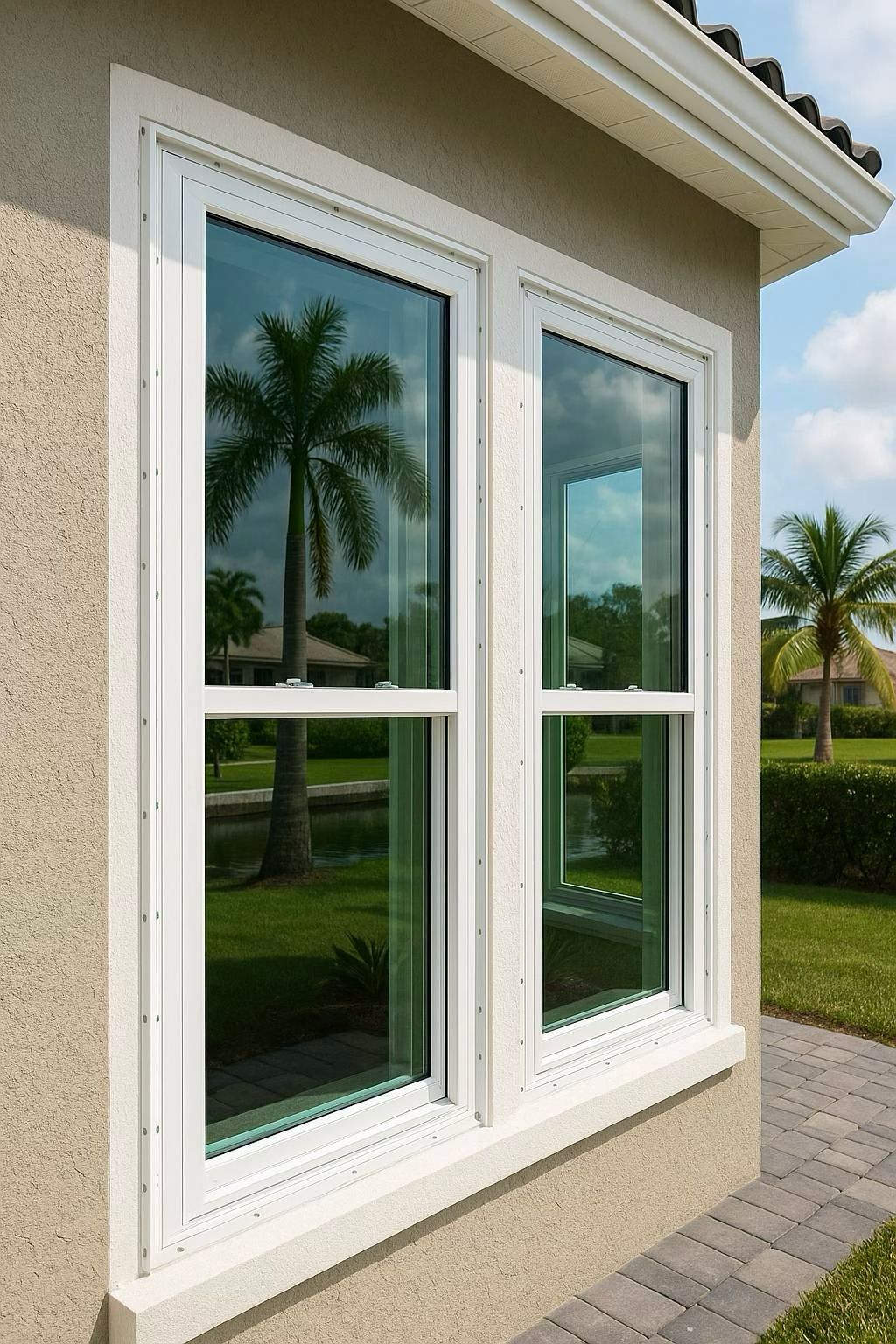
How to Compare Aluminum, Vinyl, Fiberglass, Wood, and Composite Frames for Florida Heat, Humidity, Storms, and Coastal Conditions
Choosing new windows for a Florida home involves more than selecting glass and a style. The frame material affects durability, maintenance, energy performance, appearance, cost, and how the window performs in a demanding climate.
Florida homes face intense sunlight, high humidity, heavy rain, wind-driven storms, salt exposure in coastal areas, and long cooling seasons. The best window frame material depends on the home’s location, design, budget, maintenance expectations, and the specific window system being installed.
This guide compares the most common frame materials and explains what Florida homeowners should consider before choosing replacement or impact-resistant windows.
Why Window Frame Material Matters in Florida
A window is a complete system. Glass, frame, seals, hardware, installation, and structural design all work together. A high-performance glass package cannot compensate for a poorly selected or improperly installed frame.
In Florida, homeowners should consider several climate-related factors:
- Heat and strong solar exposure.
- High humidity and frequent rain.
- Wind-driven water during severe weather.
- Hurricane and tropical storm exposure.
- Salt air and corrosion risk near the coast.
- Long periods of air-conditioning use.
- Termites and moisture concerns for susceptible materials.
- Local building code and product approval requirements.
The Main Window Frame Materials
Residential window frames are commonly made from aluminum, vinyl, fiberglass, wood, or composite materials. Each has advantages and limitations.
There is no single material that is automatically best for every Florida property. The quality and engineering of the specific product matter just as much as the material category.
1. Aluminum Window Frames
Aluminum has a long history in Florida construction. It is strong, dimensionally stable, and capable of supporting large glass areas with relatively narrow frame profiles.
Advantages of Aluminum
- High structural strength.
- Slim profiles that can maximize visible glass.
- Good dimensional stability.
- Suitable for many large window and door configurations.
- Low risk of swelling or rotting from moisture.
- Commonly available in impact-rated product lines.
Potential Limitations
Aluminum conducts heat more readily than many other frame materials. Standard aluminum frames can therefore transfer more outdoor heat into the building envelope.
Higher-performance aluminum systems may use thermal breaks or other design features to reduce heat transfer. Homeowners should compare the performance ratings of the complete window rather than judging the frame material alone.
Coastal homes should also pay close attention to finish quality, hardware, maintenance, and manufacturer recommendations because salt exposure can accelerate corrosion.
When Aluminum May Be a Good Choice
Aluminum can be a strong option when structural strength, narrow sightlines, modern appearance, or large openings are priorities. It is also common in many impact-resistant window systems.
For energy-conscious homeowners, compare U-factor, solar heat gain coefficient, glass coatings, frame design, and overall product certification.
2. Vinyl Window Frames
Vinyl frames are made primarily from polyvinyl chloride, commonly called PVC. They are widely used because they provide good thermal resistance and require relatively little routine maintenance.
Advantages of Vinyl
- Low thermal conductivity compared with standard aluminum.
- Low maintenance.
- Does not require routine painting.
- Resistant to rot.
- Available in many energy-efficient window configurations.
- Often competitively priced.
Potential Limitations
Vinyl expands and contracts with temperature changes. Quality products are engineered to accommodate this movement, but construction quality, reinforcement, installation, and product design matter.
Dark-colored vinyl can absorb more solar heat, so product specifications and manufacturer limitations should be reviewed carefully in Florida’s strong sun.
For large openings or demanding wind conditions, reinforcement and the engineering of the complete system become especially important.
When Vinyl May Be a Good Choice
Vinyl can be attractive for homeowners who prioritize thermal performance, low maintenance, and value. It is available in impact-resistant systems, but buyers should confirm that the exact size and configuration being considered has the appropriate Florida approvals for the project location.
3. Fiberglass Window Frames
Fiberglass frames are made from glass fibers embedded in a resin material. They are known for strength, dimensional stability, and relatively low thermal conductivity.
Advantages of Fiberglass
- Strong and rigid.
- Good dimensional stability in changing temperatures.
- Good thermal performance.
- Resistant to rot and moisture damage.
- Can support relatively narrow profiles in some product designs.
- Available with different finishes and appearance options.
Potential Limitations
Fiberglass windows can cost more than many standard vinyl products, and product availability may vary by market.
As with every material, performance depends on the specific system, glass package, installation, and approved design pressure.
When Fiberglass May Be a Good Choice
Fiberglass can be a strong option for homeowners seeking a combination of durability, thermal performance, and dimensional stability. It may be especially appealing for long-term projects where initial cost is balanced against performance and maintenance expectations.
4. Wood Window Frames
Wood offers a traditional appearance and natural insulating characteristics. It is often selected for architectural style, historic character, or high-end interior finishes.
Advantages of Wood
- Classic appearance.
- Good natural insulating characteristics.
- Can be painted or stained.
- Works well with traditional and custom architectural styles.
Potential Limitations in Florida
Florida’s humidity and moisture can be challenging for exposed wood. Without proper design, finishing, and maintenance, wood can be vulnerable to swelling, decay, peeling finishes, and insect damage.
For this reason, many modern wood windows use exterior cladding made from aluminum or another protective material while preserving a wood interior.
Maintenance requirements should be considered carefully, particularly near the coast.
When Wood May Be a Good Choice
Wood may be appropriate when architectural appearance is a major priority and the homeowner is prepared for the maintenance requirements. Clad wood products can provide additional exterior protection while maintaining the desired interior look.
5. Composite Window Frames
Composite is a broad category. Products may combine wood fibers, polymers, fiberglass, resins, or other materials. Because compositions differ, homeowners should not assume that all composite windows have the same properties.
Potential Advantages
- Designed to balance strength and thermal performance.
- Resistance to rot in many formulations.
- Lower maintenance than traditional exposed wood.
- Dimensional stability in quality systems.
- Appearance options that may resemble painted wood.
Potential Limitations
Performance, cost, composition, warranty, and availability vary significantly by manufacturer.
Compare the actual product ratings and approvals rather than relying only on the word composite.
Comparing Thermal Performance
Florida homes typically use air conditioning for much of the year, so reducing heat gain can be important.
Frame conductivity is one part of window performance, but the glass area usually represents a large portion of the opening. Homeowners should evaluate the complete window.
Important Energy Ratings
- U-factor: Indicates the rate of heat transfer through the window assembly. Lower values generally indicate better insulating performance.
- Solar Heat Gain Coefficient (SHGC): Measures how much solar heat passes through the window. Lower values generally reduce solar heat gain.
- Visible Transmittance: Indicates how much visible light passes through the product.
- Air Leakage Ratings: Evaluates overall air infiltration when available.
The appropriate ratings depend on the home, orientation, glazing area, local requirements, and project goals.
Impact Resistance Is About the Complete Window System
A frame material by itself does not make a window hurricane-resistant.
Impact-resistant windows are engineered and tested as complete assemblies. The frame, laminated glass, fasteners, mullions, hardware, anchors, and installation requirements all matter.
For Florida projects, verify the exact product approval, size, configuration, design pressure, exposure conditions, and installation requirements applicable to the property.
Design Pressure and Wind Loads
Windows in hurricane-prone areas must be selected for the wind pressures applicable to the building and opening. Design pressure requirements can vary based on location, building height, exposure, opening size, and other engineering factors.
A stronger frame material does not eliminate the need to select a properly rated product.
Coastal Salt Air Considerations
Salt carried by coastal air can accelerate deterioration of metal components and finishes.
For homes near the ocean or other saltwater environments, homeowners should review manufacturer guidance for coastal applications.
Consider:
- Frame finish and coating system.
- Hardware material.
- Fasteners and anchors.
- Maintenance and rinsing recommendations.
- Warranty exclusions or coastal restrictions.
- Distance from saltwater when specified by the manufacturer.
Humidity and Moisture
Florida humidity creates a demanding environment for building materials.
Vinyl, fiberglass, aluminum, and many composites are not susceptible to rot in the same way as unfinished wood. Wood systems require appropriate protection and maintenance.
Regardless of material, poor installation can allow water intrusion around the window opening. Proper flashing, sealants, drainage, and installation procedures are essential.
Sun and UV Exposure
Florida’s strong sunlight can affect finishes, sealants, weatherstripping, and some frame materials over time.
Quality windows use materials and finishes designed for exterior exposure, but performance varies.
Homeowners considering dark frame colors should verify that the color and material combination is approved by the manufacturer for the intended climate and window size.
Maintenance Requirements
Aluminum
Generally low maintenance, but coastal systems may require regular cleaning and inspection for corrosion, especially around hardware and fasteners.
Vinyl
Usually requires routine cleaning rather than painting. Inspect seals, drainage paths, hardware, and weatherstripping.
Fiberglass
Typically low maintenance. Painted finishes may eventually require attention depending on the product and exposure.
Wood
Usually requires the most attention. Exterior finishes should be inspected and maintained to protect against moisture and sunlight.
Composite
Maintenance varies by formulation and finish. Follow the manufacturer’s instructions.
Appearance and Architectural Style
Frame material affects both exterior and interior appearance.
Aluminum often works well with contemporary designs because of its narrow profiles. Vinyl is available in many conventional styles. Fiberglass and composite systems can offer clean lines and a range of finishes. Wood remains popular where a natural or traditional interior appearance is important.
Homeowners should also consider sightlines, frame depth, grille patterns, colors, and how replacement windows will coordinate with the home’s existing architecture.
Frame Material and Window Size
Larger windows place greater structural demands on frames and glass.
Some materials and product lines can accommodate larger openings more efficiently than others. The allowable size depends on the exact window type, glass, reinforcement, design pressure, and manufacturer engineering.
Do not assume that a material suitable for a small bedroom window will automatically be appropriate for a large living-room opening.
Frame Material and Installation
Even an excellent window can perform poorly if installed incorrectly.
Installation should follow the approved product documents, manufacturer instructions, applicable building code, and project-specific requirements.
Important details may include:
- Correct opening preparation.
- Approved anchors and fastener spacing.
- Proper shimming.
- Flashing and water management.
- Sealant selection and joint preparation.
- Correct installation of mullions.
- Inspection requirements.
Replacement Windows in Existing Florida Homes
Replacement projects can involve additional considerations because existing openings may have older frames, stucco, siding, waterproofing, or structural conditions.
The installer should evaluate the opening and determine the appropriate replacement method. Removing an old window can reveal damage that should be addressed before the new unit is installed.
New Construction vs. Replacement
New construction windows are installed as part of a new wall assembly, while replacement windows must integrate with an existing building.
The best frame material can be influenced by the installation method, architectural requirements, and existing conditions. Homeowners should compare complete project proposals rather than focusing only on the material price.
Energy Efficiency and Frame Color
Color can affect heat absorption, particularly on sun-exposed surfaces. Dark frames may reach higher surface temperatures than light frames.
This does not automatically make dark frames unsuitable, but the product must be designed and approved for the intended color, climate, size, and exposure. Always follow manufacturer specifications.
Noise Reduction
Homeowners near highways, airports, or busy neighborhoods may also consider sound control.
Frame material contributes to overall construction, but glass thickness, laminated glass, insulating glass configuration, seals, air leakage, and installation can have a significant effect on sound performance. Choose the complete window system based on the noise goal rather than relying on frame material alone.
Security
Window security depends on the complete assembly, including frame strength, glass, locks, hardware, installation, and anchoring.
Impact-resistant laminated glass can provide additional resistance to penetration, but homeowners should evaluate security features as part of the full window specification.
Cost Considerations
Window prices vary widely based on material, size, style, impact rating, glass package, finish, hardware, installation complexity, and manufacturer.
A lower initial price does not always mean the lowest long-term cost. Homeowners should also consider maintenance, energy performance, expected service life, warranty, and installation quality.
Comparing equivalent products is important. A basic non-impact window should not be compared directly with a high-performance impact-rated system.
Warranty Considerations
Review the written warranty before purchasing windows. Important questions include:
- What components are covered?
- How long does coverage last?
- Is labor included?
- Are glass breakage or seal failures covered?
- Are finishes covered?
- Are coastal installations treated differently?
- Does the warranty transfer to a future owner?
- What maintenance is required to preserve coverage?
Warranty terms vary by manufacturer and product.
Which Frame Material Is Best for Florida?
The answer depends on the homeowner’s priorities.
Consider Aluminum If:
- Structural strength is a major priority.
- You prefer narrow, modern profiles.
- You need large openings or specific impact configurations.
- You are comparing thermally improved aluminum systems.
Consider Vinyl If:
- Thermal efficiency and low maintenance are priorities.
- You want a broad range of residential replacement options.
- You are seeking value while still evaluating impact-rated products.
Consider Fiberglass If:
- You want strength and dimensional stability.
- You prioritize thermal performance and durability.
- You are comfortable with potentially higher initial cost.
Consider Wood If:
- Traditional appearance is a major priority.
- You want a natural interior finish.
- You understand and accept the maintenance requirements.
Consider Composite If:
- You want a balance of performance and low maintenance.
- You prefer a wood-like appearance without exposed traditional wood.
- You have reviewed the specific product composition, ratings, and warranty.
Questions to Ask Before Choosing a Window
- Is this exact product approved for my Florida location and application?
- Is the window impact-resistant if my project requires it?
- What design pressure is required for the opening?
- What are the U-factor and SHGC ratings?
- How does the frame perform in coastal conditions?
- What maintenance is required?
- What finish and color options are approved?
- What is included in the warranty?
- Who will install the windows?
- How will the opening be waterproofed?
- Are permits and inspections required for this project?
- What happens if hidden damage is found during removal?
Common Mistakes Florida Homeowners Should Avoid
- Choosing a window based only on frame material.
- Assuming every impact window is appropriate for every opening.
- Ignoring design pressure requirements.
- Comparing products with different glass and impact specifications as if they are equivalent.
- Selecting a dark frame without checking manufacturer limitations.
- Overlooking coastal corrosion considerations.
- Focusing on product price while ignoring installation quality.
- Assuming energy efficiency depends only on the frame.
- Failing to review product approvals and warranty terms.
- Choosing a contractor without confirming licensing and project requirements.
Frequently Asked Questions
Is vinyl or aluminum better for Florida windows?
Both can work well when the product is properly engineered and selected. Vinyl generally offers lower thermal conductivity, while aluminum is valued for strength and narrow profiles. Compare the complete window’s ratings, impact approval, design pressure, warranty, and installation requirements.
Are fiberglass windows good for Florida?
Fiberglass can be a strong choice because of its strength, dimensional stability, moisture resistance, and thermal characteristics. Availability and cost vary, so compare specific products.
Are wood windows a bad choice in Florida?
Not necessarily. Wood can provide excellent appearance and good insulating characteristics, but Florida humidity and moisture increase maintenance demands. Clad wood systems can provide additional exterior protection.
Does an aluminum frame make a window hurricane-proof?
No. Hurricane performance depends on the tested and approved complete window system, including glass, frame, hardware, anchors, size, configuration, and installation.
Which frame is most energy-efficient?
Frame conductivity matters, but energy performance should be evaluated using the ratings of the complete window. Glass coatings, insulating glass, spacers, frame design, and installation all affect performance.
What is most important for coastal homes?
In addition to wind and impact requirements, coastal homeowners should pay close attention to corrosion-resistant finishes, hardware, fasteners, manufacturer coastal guidance, maintenance, and warranty terms.
Choose the Complete Window System, Not Just the Frame
Florida homeowners have several strong window frame options. Aluminum offers structural strength and narrow profiles. Vinyl provides low maintenance and good thermal characteristics. Fiberglass combines strength with dimensional stability. Wood delivers traditional appearance, while composite products can balance several performance goals.
The best choice depends on the complete window system, the home’s location, the opening size, required wind performance, energy goals, maintenance expectations, and budget.
Patriot Windows & Doors helps Florida homeowners evaluate window and door options for their homes, including impact-resistant products designed for Florida conditions. A professional evaluation can help match the right frame, glass, product approval, and installation approach to the specific project.
Note: This article is for general informational purposes only. Building codes, product approvals, wind requirements, permit rules, installation requirements, warranties, and energy standards vary by location and project. Product specifications can change. Consult qualified contractors, manufacturers, design professionals, and local authorities as appropriate before selecting or installing windows.