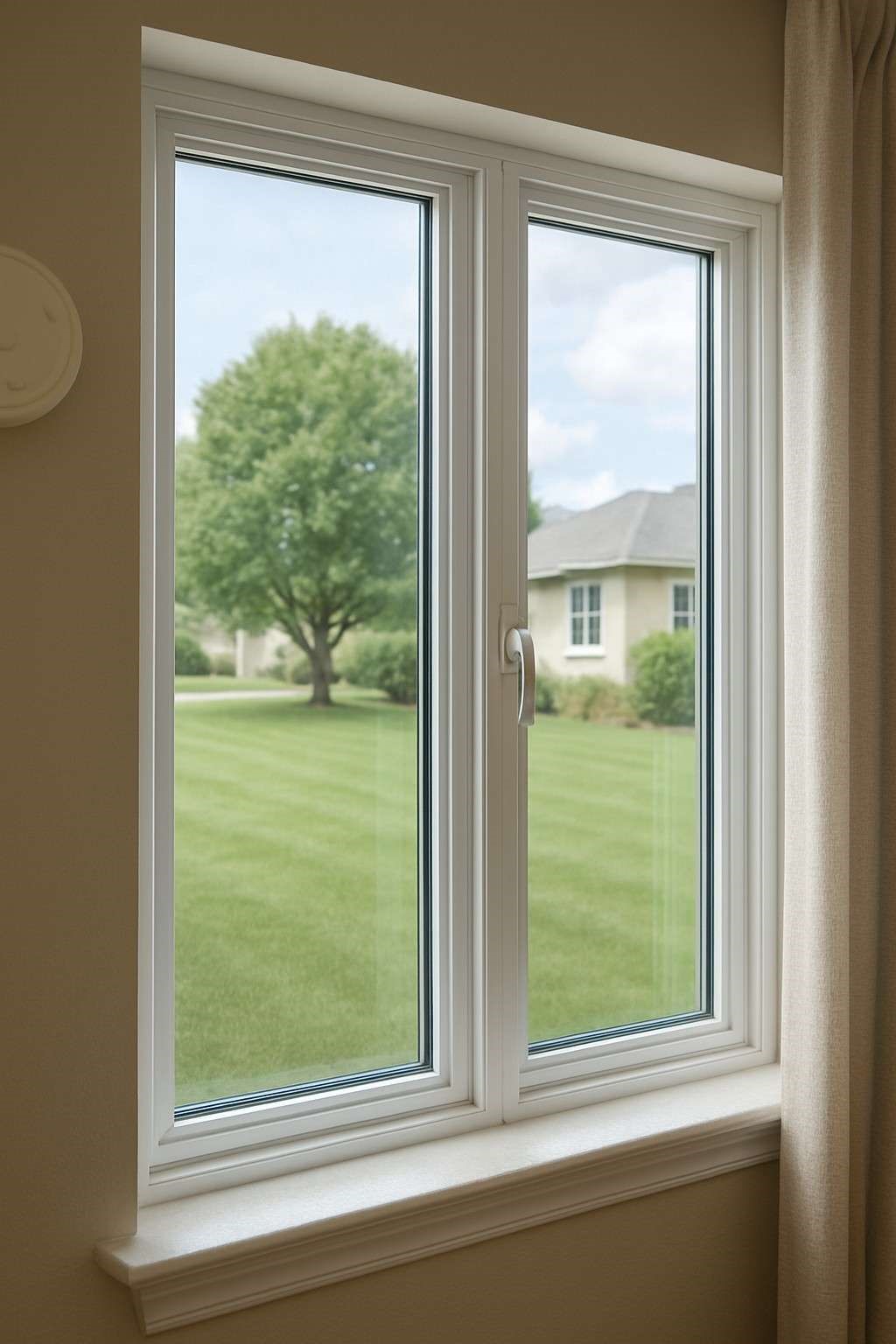
How to Make Energy-Efficient Windows Save You Money What you need to learn can be found in the article. Razor-share tips, examples, as well as strategies for achieving this better.
Welcome to our deeply comprehensive guide on energy-efficient windows. Whether you’re in the business of energy savings and home efficiency from the beginning or you’re someone who’s just started to nod towards creating a sustainable home, this article will discontinue what’s this energy saving windows jargon and why it’s so important you know. The threat of rising energy and insurance bills in the face of extreme weather events is causing homeowners to reconsider – not just immediate monthly expenses but long-term investment in the protection and savings of new-build materials.
What is energy-efficient windows?
Energy-efficient windows are specifically made windows which are good at keeping heat inside a building as hot air goes out. To add insulation, energy-efficient windows usually incorporate some advanced technology like the low-emissivity Low-E coatings, multiple glass panes and (krypton or argon) insulating gas fills along with weather tight-conditioned frames.
While most of the models are better at insulating a building than their single-paned predecessor, other advantages are lessened demand for heating or cooling in the home, reduced dependence on the HVAC system, and a resultant slashing in energy costs. Energy-saving aside, such windows contribute to better indoor comfort, less noise, and provide protection from UV rays for furniture and flooring.
But there is another lesser known financial advantage: savings on insurance premiums. Installing contemporary, energy-saving windows very often makes a home more resistant to environmental damage and, as a result, less risky for insurers. This lowers at least part of the premium for insureds placed in risk categories by window upgrade.
Why energy-efficient windows Matters for Energy Savings and Home Efficiency
Energy-efficient windows are much more than simply a greening of your home, but the strategic investment on the long-term resilience and value of the asset. In the U. S., windows can stand for 25%–30%; of residential heating and cooling energy use, said the Department of Energy. Inefficient windows, from either poor insulation or cracks to outdated designs, can sap your home of that thermal efficiency and lead to increased utility billing.
Because your opportunity loss from loss of efficiency, as well as carbon emissions caused by inefficient energy usage, is likely to decrease as soon as high-performance windows are integrated into your home. Additionally, this window is usually available under national and state energy efficiency programs for direct federal tax credits as well as utility rebates, especially under the modified Energy Efficient Home Improvement Credit which carries on till 2032.
The benefits also extend beyond energy bill savings. Additionally, few homeowners realize that insurance companies factor in home improvements when assessing the annual insurance premiums. Such companies come to know that installation of energy-efficient and usually impact-resistant or rated for high-wind and storm-prone environments window effectively fortifies the structure of the house itself, prompting them to offer potential savings on one’s insurance premiums to ensure low risks.
For instance, in hurricane-prone states such as Florida, Louisiana, or Texas, insurance companies often reward the homeowners who invest in impact-resistant windows made to withstand projectiles, water infiltration, or gusty winds. Impact-resistant insulated windows are increasingly part of the insurance underwriting process to secure the fortification value of the said property.
This particular measure correspondingly complies with the reinforced construction guidelines put forth by the regular dues for groups such as the Insurance Institute for Business and Home Safety (IBHS). Houses made to be a recipient of the designation “Fortified™ Home” could result in a reduction in premium payments on the homes, typically ranging from 10 percent up to 30 percent location-by-location and insurer-by-insurer. Energy-efficient impact-resistant windows can help surpass these resilience standards.
He was able to bear a great deal of self-pity, but then he began not to know what to do with himself.
There’s more than just insurance. You could get good resale value because of improved energy ratings’. Energy Star replacements increase the resale value of the house because single pane windows are replaced with very efficient new models; the resale values come out to 67%–72% according to the 2024 Remodeling Impact Report of the National Association of Realtors. Improved comfort, UV protection, and noise insulation together with good resale are some of the best returns you will get from choosing energy-efficient windows.
Understanding Insurance Premium Savings Through Smart Window Upgrades
Here’s how premium savings in insurance works with respect to the efficiency of windows: An insurance premium is meant to cover risk, thus, the higher the probability of an insured filing for a claim, the higher the amount of money to be paid as a premium. By reducing weather-related risks like storm damage, water intrusion, or shattered glass, energy-efficient, durable windows reduce the probability of a claim, as heavy insurance costs would accompany any one of these types of claims.
Following the increase in frequency and intensity of natural disasters across the United States, insurers are revising their risk algorithms and adjusting the corresponding premium structure accordingly. In regions like California and Colorado, risks of wildfires have triggered a significant reconsideration of home fire resistance. From now on, fire-rated glass and tempered glass windows can meet both the needs—saving energy and facilitating fulfillment of wildfire-resilience codes—as the result of premium discounts.
Smart home updates paired with security technology, or storm shutters when added alongside energy-efficient windows, can compose an important insurance-friendly cluster. Major insurance carriages now offer discounts for “green home” installations or incentives for home renovation for those cost-efficient and safety-minded retrofits.
So, take advice for real savings:
- Evaluate Energy Star grade of windows or the standards issued by NFRC for actual performance.
- Opt for double or triple-pane filled windows with gas and Low-E coatings.
- If you are in high-risk areas, try to use impact-rated or hurricane-proof windows.
- Also, your insurance company will want to keep written documentation and proof of these improvements.
Before installation, consulting your insurance agent is a good idea to see what kind of models or certifications might influence your coverage and discount eligibility. These updates, combined with other improvements in smart homeownership, can substantially lower the total cost in the year.
The success or failure could be determined by the insight into how energy-efficient windows can affect your premium savings performance. Shall have some real-life examples presented in the form of the next session soon.
Common Challenges and How to Overcome Them
Although energy-saving windows have multiple benefits when installed in houses and properties, they also come with several obstacles with which homeowners or property managers find hardships. Learning the problems can help in deterring energy and efficiency loss over the life of your home, leading to some long-term savings.
- Initial Cost: Initial costs of installation and acquisition of energy-efficient windows form one of the considerable challenges. They offer a very high initial cost compared to ordinary windows, but bill long-term returns in lessened energy bills and premium savings on the investment made during the initial stage.
- Compatibility with the Existing Structure: These technological marvels can’t fit into older homes which are characterized by the absence of their proper proportion. When necessary, a specialist evaluation and retrofitting programs are among the possible solutions to facilitate the fitting into the existing window frames.
- Uninformed: The fact that homeowners do not know is why they do not take all the functional benefits into consideration aside from selecting the best window rating, in which case they appear to be unaware of the many factors associated with rating windows, including U-factor and Solar Heat Gain Coefficient (SHGC). They can still buy comprehensive knowledge if there are professionals who sensitize them or ENERGY STAR® on the latest tools and decisions or if they use practical “hands-on” instructional courses.
Maximizing ROI with Proper Installation and Maintenance
In such a case, a person’s investment in energy-efficient windows will not have substantial value if they do not concentrate on establishing the correct installation from the start. The damage might not be one to the windows themselves, but rather be in the form of air and moisture infiltration, or it may also lead to substantial decline in energy efficiency.
Some of the ways that you can maximize return on your investment are:
- Partner with Accredited Installers: Architects accredited by the American Window and Door Institute (AWDI), National Fenestration Rating Council(NFRC) being some examples, have been shown to have rigorous energy performance standards along those guidelines.
- Regular Check-ups: Every year check window seals, caulk, and frames for possible areas of damage or wear. Preventative maintenance is key to ensuring constant energy performance levels in the face of seasonal change.
- Use a weatherstrip: It can create very effective thermal insulation in conjunction with high-quality weatherstripping and insulated curtains on already better windows, hence a double energy- and insurance-conserving possibility.
Financial Incentives and Policy Support
Because national and private sectors are actualizing home energy savings and reduced production of carbon emissions, several policies and financial schemes make it easier for replacements at the household level for energy efficient windows.
Some of it is:
In addition, here are more topics that will be tackled in this blog:
- Federal Tax Credits: Federal tax credits are generously provided by the us government under the American Recoveries and Reinvestment Act for homeowners investing in certain windows that are energy efficient – potentially covering up to 30% of your charges.
- State-Specific Rebates: These rebates are usually offered by way of utility company programs or in consort with state or locally offered energy efficiency programs. They often refer to product certification as well as energy performance issues.
- Insurance Premium Discounts: These could be possible with an insurance company if one chooses to upgrade their energy-using home with the right facilities like energy-efficient windows. An exact science maybe, but saving a few pennies here is for sure the best solution to battle phenomenal comfort and budget losses.
Energy Efficiency and Environmental Impact
Efficient windows do have actual beneficial involvement apart from the financial gains one can get from using them. Generally speaking, standard windows could lose a lot of thermal energy, whereas the innovative windows are efficient in temperature control and use far lesser amount of energy for heating and cooling purposes.
Because of energy saving by use of energy-efficient windows, every homeowner directly reduces the carbon footprint. From a wider look, the installation of energy-saving window glasses in large quantities gives positive notions of lessening air pollution, retarding the aggravation of greenhouse gas emissions, and reduction in the use of non-renewable energies.’
The U. S. Department of Energy indicates in their study that if the United States government uses Energy Star-rated windows in place of single-panes, they make it possible for household energy costs savings from $125 to $465 annually. This has serious implications for homeowners and their advocates.
Integrating with Smart Technology
As home technology becomes more and more sophisticated, new energy-efficient windows now include smartness to improve the performance that was extracted from automatic systems. Smart glass, which can adjust transparency based on sunlight, temperature, and privacy needed is available to feature maximum performance.
Also, when integrated with the home energy management system, it would allow the user to continuously monitor energy loss. This informed view would enable homeowners to change their methods of usage accordingly, thereby fully utilizing the energy-saving features of the window.
Case Study: A Residential Success Story
For instance, one can consider a homesite in the Northeast whose owner replaced the original 90s windows with seasonally efficient, triple pane windows that feature the new fangled low-E coating and gas-equipments.” Amazing results followed: 30% reduction in costs of energy bills, not hot or cold spots in any room; with an insurance discount also of up to 10% of your previous rates because of the improvement of energy efficiency, silent-glazing, and security.
A house’s resale value rose by 7 percent after all that with an improvement in energy performance and smart upgrades–in a truly holistic way–from environmental improvement to economic gains.
Maximizing the Benefits of Energy-Efficient Windows
Energy-efficient window investment on a property provides more than merely a good aesthetic appearance or improvement in the value of a house-it also represents a move in savings and absolute comfort in the long run. Designed to mitigate draft and decrease transfer of heat inside, these windows also help to modulate indoor temperature. Insulation would be responsible for the upkeep of safety premiums: a majorly overlooked advantage.
There are other ways that insurance companies might provide houses with windows that are energy efficient at a much reduced premium.
With a view to risk-related factors, insurances are somewhat cheaper. You reduce the probability for lower charges by making very energy-efficient windows.
Then you put your house into action by installing durable double or triple glazing, probably equipped with Low-E coatings plus enhanced locking features as well. This will not only save energy but provide security reasons for any property where the family resides. It makes the house look like there are fewer probabilities for any damage and theft that will need to be addressed in a claim, making the house less risky to insurers.
Additional Benefits of Installing Energy-Efficient Windows
- Lower Electric Bills: Absorbing about 30% annually, depending on climate and condition of the house, lost energy that usually occurs.
- Protection from UV: An increase in the longevity of a person’s equipment, fixtures, and decorative stuff due to avoidance of dangerous sun rays.
- Noise Reduction: Giving peace and tranquility at home due to the reduction of external noise beyond multi-pane windows.
- Increases the Value: The property is powered in such a way so that it becomes appealing to buyers through energy-efficient retrofits in most instances.
- Environmental Impact: Considering the peak heating and cooling period, nurtures the reduction of waste in carbon content.
Such as using gas fills such Argon and Krypton, thermally-improved frames, and weather selective coating are pushing forward energy efficiency of windows. An installation of ENERGY STAR certified windows, proposed by the U. S. Department of Energy can save homeowners up to $465 per annum in energy costs. Insurance underwriters are often attracted by these types of improvements, which can result in lodging of premiums for damage or weather accidents.
How to Qualify for Insurance Premium Savings
Your insurance provider should be contacted after improving windows for the potential savings offered through insurance. Avail the documentation in the form of Energy Star certification s, as well as invoices for work by licensed contractors and manufacturer specifications for any improvement in the resistance to weather or break-in technology.
There are a few companies that may send a home inspector to verify the said changes. Once verified, discounts in your insurance premium–spanning from 5 to 15 percent–can be realized in the savings mentioned upon renewal.
Don’t forget to use other renovations paired with some window updates-by changing the smoke detector to a smart detector, changing the roof, or even putting in some hurricane shutters, for instance-and make further savings. Coupled with other measures, it makes one’s abode more secure and efficient for family living.
Frequently Asked Questions
What is energy-efficient windows in simple terms?
Energy-efficient windows is a strategy or concept used to improve insurance premium savings by focusing on structured, intentional methods.
How does energy-efficient windows help?
It helps improve performance by aligning your content with search behavior and industry best practices.
Can I apply energy-efficient windows myself?
Absolutely. With the right tools and structure, even beginners can begin applying these principles effectively.
What tools should I use?
Start with Google Search Console, SEMrush, and keyword research tools. These provide visibility into how energy-efficient windows impacts performance.
CTA: Ready to Experience the Benefits?
Upgrading to energy-efficient windows not only enhances comfort and savings but may also unlock greater insurance premium savings. Whether you’re in the early planning phase or ready to install, our team is here to help you make informed, budget-friendly decisions.
Request Your Free Consultation Today!
Explore more about energy savings through our other articles:
Learn more from trusted external sources: