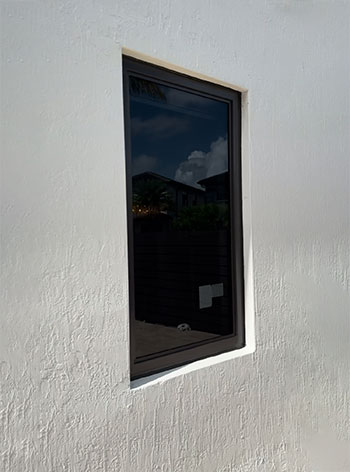
A practical guide to ventilation, impact-resistant options, energy performance, coastal considerations, maintenance, design, and installation
Casement windows are a popular option for homeowners who want broad ventilation, clean sightlines, and a window that closes tightly against its frame. Instead of sliding vertically or horizontally, a casement window is hinged along one side and typically opens outward with a crank or similar operating mechanism.
For Florida homes, window selection also involves climate and storm considerations. Heat, humidity, heavy rain, salt exposure in coastal areas, wind, and hurricane-related requirements can all influence which product and installation method are appropriate.
Casement windows can be a strong choice in many Florida properties, but the exact window must be evaluated for the opening, exposure, applicable building requirements, and homeowner priorities.
What Is a Casement Window?
A casement window is attached to the frame with hinges along one vertical side. When opened, the sash swings outward.
Typical components include
- Hinged sash.
- Crank or operating handle.
- Locking hardware.
- Weatherstripping.
- Screen on the interior side on many designs.
- Insulated or laminated glass depending on the product.
How Casement Windows Differ From Sliding Windows
A single-hung window moves vertically. A horizontal slider moves side to side. A casement window swings outward.
This different operating method affects ventilation, cleaning, screen placement, hardware, exterior clearance, and how the sash seals when closed.
Why Florida Homeowners Consider Casement Windows
Common reasons include
- Wide ventilation openings.
- Clean, contemporary appearance.
- Large areas of visible glass.
- Easy crank operation on many models.
- Strong perimeter compression when closed on certain designs.
- Availability of impact-resistant systems from some manufacturers.
Ventilation Is a Major Advantage
Because the sash can open outward substantially, a casement window can provide a large ventilation opening.
Depending on wind direction and window placement, the open sash may also help direct outdoor air toward the interior.
Actual airflow varies with wind, pressure, landscaping, nearby structures, screens, and other openings.
Useful in Florida’s Mild-Weather Months
Florida homes often rely heavily on air conditioning, but there are periods when outdoor conditions are comfortable enough for natural ventilation.
Casement windows can make it easy to open a room to outside air when weather and humidity are appropriate.
A Tight Closing Design
Many casement designs use locking hardware that pulls the sash toward the frame and weatherstripping when closed.
This can support good air-infiltration performance, but homeowners should compare the tested ratings of the exact product rather than assuming every casement performs the same.
Energy Performance in a Hot Climate
Florida homeowners often focus on limiting unwanted heat gain while maintaining comfortable indoor conditions.
Window energy performance can be influenced by
- Solar Heat Gain Coefficient.
- U-factor.
- Low-emissivity glass coatings.
- Frame construction.
- Glass configuration.
- Air leakage.
- Window orientation.
- Exterior shading.
- Installation quality.
The appropriate glass package depends on the home, orientation, climate zone, and approved product options.
Solar Heat Gain Matters
Solar heat entering through glass can affect interior comfort and cooling demand.
Homeowners should compare Solar Heat Gain Coefficient ratings for the specific windows being considered and discuss glass options suitable for the property’s exposure.
Impact-Resistant Casement Windows
Some manufacturers offer casement windows as part of tested impact-resistant systems.
Impact resistance is not determined simply by the window style. The frame, glass, hardware, anchors, size, installation, and complete approved assembly matter.
Confirm
- Exact product approval.
- Approved size and configuration.
- Design pressures or applicable performance ratings.
- Impact glazing configuration.
- Required anchors.
- Installation instructions.
- Local permit requirements.
Impact-Resistant Does Not Mean Unbreakable
Impact-resistant windows should not be described as hurricane-proof or impossible to break.
Glass may crack under severe impact. The tested assembly is designed to perform according to its rating and approval conditions.
Florida Building Requirements Vary by Location
Florida window projects can be subject to different wind, impact, product-approval, and permitting requirements depending on the property’s location and characteristics.
Requirements can be more demanding in certain wind-borne debris or high-velocity hurricane areas.
A qualified contractor should verify the requirements that apply to the specific property rather than relying on a general statewide assumption.
Water Resistance Is Important in Florida
Heavy rain and wind-driven rain can expose weaknesses in window systems and installation details.
Water performance depends on the tested product, sill and frame design, drainage, sealants, flashing or water-management details, and installation.
A casement window should be selected and installed for the conditions expected at the property.
Coastal Salt Exposure
Homes near saltwater can experience accelerated corrosion of metal components.
Coastal homeowners should ask about
- Hardware materials and finishes.
- Manufacturer coastal-use guidance.
- Cleaning requirements.
- Warranty limitations.
- Maintenance of hinges, operators, and fasteners.
Distance from the coast is not the only factor. Wind exposure and local conditions also matter.
Screens Are Usually on the Interior
Because a casement sash opens outward, the insect screen is commonly positioned on the interior side.
This can protect the screen from some exterior exposure, but screen configuration varies by product.
Crank Operation Can Be Convenient
The crank mechanism allows the sash to open without pushing directly on the glass or frame.
This can be useful in locations where reaching the window is slightly awkward, such as over certain countertops, provided the handle remains accessible.
Casement Windows Over Kitchen Counters
Casement windows are often considered above kitchen counters because crank operation can be easier than lifting a sash upward.
Homeowners should confirm that the crank, lock, and screen can be reached comfortably from the intended location.
Casement Windows in Bathrooms
A casement window can provide useful ventilation in a bathroom, but privacy, safety glazing, water exposure, and local code requirements should be considered.
Privacy glass or other approved glazing options may be available depending on the product.
Casement Windows in Bedrooms
Casement windows may provide a large clear opening relative to the frame size, which can be useful where emergency escape and rescue requirements apply.
However, not every casement window automatically qualifies. Clear opening dimensions, opening area, sill height, hardware, and local code must be verified for the specific opening.
Casement Windows in Living Rooms
Large casement windows or combinations of fixed and operable units can create broad views while maintaining ventilation.
The exact combination should be reviewed for structural, performance, appearance, and approval requirements.
Casement Windows Near Walkways
Because the sash projects outward, placement matters.
An open casement can interfere with narrow walkways, patios, landscaping, decks, or other exterior activity areas.
Exterior clearance should be reviewed before choosing this style.
Casement Windows Near Pools
Windows near pools can involve safety glazing, barrier, opening, and other code considerations.
A contractor should evaluate the exact location and applicable requirements before changing the window style.
Cleaning Casement Windows
Cleaning access depends on the product, sash angle, opening location, and building height.
Some casement designs allow homeowners to reach much of the exterior glass from inside, while others may still require exterior access.
Ask for a demonstration of the exact product.
Maintaining the Operator
The crank operator and hinges are moving components.
Routine care may include
- Keeping tracks and hardware free of debris.
- Following manufacturer lubrication instructions.
- Avoiding force when the sash is obstructed.
- Inspecting screws and hardware.
- Cleaning salt residue where applicable.
Follow manufacturer instructions rather than applying unapproved lubricants or chemicals.
Maintaining Weatherstripping
Weatherstripping helps control air and water infiltration.
Inspect seals periodically for dirt, damage, or displacement and follow the manufacturer’s cleaning and replacement guidance.
Do Not Force a Casement Window in Strong Wind
An open sash can catch wind.
Homeowners should use care when operating projecting windows during windy conditions and follow manufacturer recommendations. Windows should be secured appropriately when severe weather approaches.
Preparing for a Storm
If the home uses impact-resistant casement windows as part of its storm-protection strategy, verify that the exact system is approved for that use and that the windows are fully closed and locked as instructed.
Impact windows do not eliminate the need for a broader hurricane preparedness plan.
Casement vs. Single-Hung Windows
Casement advantages
- Broad opening for ventilation.
- Crank operation.
- Potentially large visible glass area.
- Different sealing approach.
Single-hung advantages
- Sash does not project outside.
- Simple vertical operation.
- Often familiar and cost-conscious.
- May fit traditional architectural styles well.
Performance should be compared using specific product ratings.
Casement vs. Double-Hung Windows
Double-hung windows offer top and bottom sash operation while staying within the plane of the wall.
Casements project outward and can provide a broad single opening.
Cleaning preferences, exterior clearance, ventilation, architecture, and product availability can guide the decision.
Casement vs. Horizontal Sliding Windows
A horizontal slider opens within its frame and does not project outward.
Casement windows use hinges and a crank, providing a different opening shape and sealing system.
The proportions of the opening often influence which style looks most natural.
Casement vs. Fixed Picture Windows
A picture window does not open, so it can provide uninterrupted views without operating hardware.
A casement provides ventilation. Combining fixed and casement windows can balance views with operability.
Can Casement Windows Be Large?
Casement windows are available in many sizes, but the allowable dimensions depend on the specific product, glass, hardware, performance requirements, and approvals.
Large operable sashes can be heavy, so manufacturer limits should be respected.
Frame Materials
Casement windows may be available in different frame materials depending on the manufacturer.
Selection considerations can include
- Durability.
- Maintenance.
- Thermal performance.
- Coastal exposure.
- Frame dimensions.
- Color availability.
- Impact-system availability.
Frame Color and Curb Appeal
Casement windows can support contemporary, coastal, transitional, and other architectural styles.
Frame color should coordinate with stucco, siding, trim, doors, roofing, and other exterior features.
Grid Patterns
Grids can make a casement window appear more traditional, while uninterrupted glass often creates a cleaner contemporary look.
Available grid designs depend on the manufacturer and approved configuration.
Visible Glass and Sightlines
Frame and sash dimensions affect the amount of visible glass.
Compare actual product drawings when sightlines are an important design priority, especially when combining casements with fixed windows.
Combining Casement and Fixed Windows
A common design approach uses a larger fixed center window with operable casements nearby.
This can preserve broad views while providing ventilation, subject to structural and product limitations.
French Casement Configurations
Some manufacturers offer paired casement configurations that create a wide opening when both sashes are open.
Availability, meeting-stile design, impact approval, and size limitations vary by product.
Security Considerations
Casement windows typically use locking hardware integrated into the frame or sash.
Security performance depends on the complete product and installation. Homeowners should review available locking features and use the windows according to manufacturer instructions.
Noise Reduction
Certain casement products may provide improved sound control compared with older windows, but results depend on glass, seals, frame, installation, wall construction, and the type of noise.
No ordinary residential window should be assumed to make a room soundproof.
Condensation
Interior condensation can be affected by humidity, outdoor temperature, ventilation, air conditioning, and glass temperature.
Condensation between panes can indicate a sealed-glass issue.
The presence of condensation should be diagnosed rather than assuming a particular window style will solve it.
Can Casement Windows Lower Energy Bills?
A properly selected and installed replacement may improve energy performance compared with an older, poorly performing window.
Actual utility savings vary widely and should not be guaranteed. Climate, glass, shading, HVAC efficiency, home construction, and occupant behavior all influence energy use.
Installation Quality Is Critical
Florida’s weather makes correct installation particularly important.
Installation should address
- Accurate measurement.
- Opening condition.
- Approved anchors and spacing.
- Level and square placement.
- Water-management details.
- Perimeter sealing.
- Interior and exterior finishing.
- Operation and locking checks.
The contractor should follow the applicable product approval and installation instructions.
Existing Water Damage Must Be Addressed
Removing an old window can reveal deteriorated framing, water damage, or previous installation problems.
Installing a new window without addressing damaged surrounding materials can leave the underlying problem unresolved.
Ask how concealed conditions will be documented and handled.
Permitting
Window replacement often requires permits in Florida, but the exact requirements depend on the jurisdiction and scope.
Ask who will obtain the permit, which product documentation is required, and how inspections will be coordinated.
Product Approvals
Florida projects may require documentation demonstrating that the selected product is approved for the intended use.
The exact approval, size, design pressure, impact configuration, and installation method should match the project.
Questions to Ask Before Buying Casement Windows
- Is this exact model approved for my property and opening?
- Is an impact-resistant version available?
- What are the applicable performance ratings?
- What glass packages are available?
- How far does the sash project outward?
- How is the exterior glass cleaned?
- What maintenance does the operator require?
- What coastal-use guidance applies?
- What permit documentation is needed?
- What product and installation warranties apply?
Signs Casement Windows May Be a Good Fit
- You want broad ventilation.
- You prefer crank operation.
- You like clean sightlines.
- Exterior clearance is available.
- You want an operable window beside a fixed picture window.
- An approved product meets the property’s storm and performance requirements.
Situations Where Another Style May Be Better
- The window opens directly over a narrow exterior walkway.
- Exterior clearance is limited.
- You prefer a sash that stays within the wall plane.
- You want top-sash ventilation.
- The desired casement product is not available in the required approved configuration.
- The architectural style strongly favors another window type.
Common Casement Window Buying Mistakes
- Choosing by appearance without checking approvals.
- Ignoring how far the sash projects.
- Assuming all impact windows have identical ratings.
- Overlooking hardware maintenance.
- Failing to consider coastal exposure.
- Ignoring egress requirements in bedrooms.
- Assuming energy savings are guaranteed.
- Focusing on the product while overlooking installation quality.
A Practical Selection Process
Step 1: Evaluate the opening
Check dimensions, condition, exterior clearance, water history, and room use.
Step 2: Define priorities
Identify whether ventilation, views, storm performance, energy performance, design, or easy operation matters most.
Step 3: Confirm applicable requirements
Determine permitting, wind, impact, egress, and other relevant requirements.
Step 4: Compare approved products
Review frame dimensions, glass options, ratings, operation, color, and warranty.
Step 5: Review installation details
Understand anchoring, sealing, finishing, and treatment of concealed damage.
Step 6: Test the operation
When possible, operate a sample window to evaluate crank effort, locks, screens, and cleaning access.
Florida Casement Window Checklist
- Confirm product approval.
- Confirm impact requirements.
- Review wind-performance information.
- Compare glass options.
- Review Solar Heat Gain Coefficient.
- Check exterior clearance.
- Verify egress where applicable.
- Review coastal hardware guidance.
- Confirm installation method.
- Confirm permit responsibility.
- Review warranties.
- Plan maintenance.
Frequently Asked Questions
Are casement windows good for Florida?
They can be a good choice when the specific product is appropriate for the opening, climate, exposure, and applicable building requirements. Their broad ventilation and crank operation appeal to many homeowners.
Can casement windows be impact resistant?
Yes, some manufacturers offer impact-resistant casement systems. Confirm the exact approved product, size, glass, anchoring, and installation requirements.
Are casement windows energy efficient?
They can offer strong energy performance, but ratings vary. Compare the exact U-factor, Solar Heat Gain Coefficient, air-leakage information, glass, and frame.
Do casement windows leak in heavy rain?
A properly selected, tested, maintained, and installed window is designed for specified water performance. Actual performance depends on the product, installation, exposure, and surrounding building envelope.
Can casement windows be used in bedrooms?
Yes, when the specific window and opening meet applicable emergency escape and other code requirements.
Are casement windows difficult to clean?
Cleaning access varies by design and location. Ask for a demonstration of the exact model, particularly for upper-story windows.
Do casement windows require more maintenance?
They contain hinges and operating hardware that should be maintained according to manufacturer instructions. Maintenance needs vary by product and exposure.
Are casement windows good near the ocean?
They may be appropriate, but coastal environments can be corrosive. Confirm the manufacturer’s coastal-use guidance, hardware materials, maintenance requirements, and warranty conditions.
Can I leave casement windows open during rain?
Because the sash opens outward, wind and rain can enter depending on conditions. Close windows when weather threatens and follow manufacturer guidance.
How do casement windows compare with single-hung windows?
Casements swing outward and use a crank, while single-hung windows slide vertically. Casements generally provide a broad opening, while single-hung windows do not project outside. The better option depends on the property and homeowner priorities.
Are Casement Windows Right for Your Florida Home?
Casement windows combine broad ventilation, clean sightlines, and a distinctive operating style. For Florida homes, they can also be available within impact-resistant and energy-performing product systems designed for demanding conditions.
The best choice depends on more than style. Homeowners should evaluate storm requirements, product approvals, glass, exterior clearance, coastal exposure, egress, maintenance, installation, and the specific architecture of the home.
A properly selected casement window can provide both practical function and a clean exterior appearance when it is matched carefully to the opening.
Explore Casement Window Options With Patriot Windows & Doors
Patriot Windows & Doors can help homeowners compare casement windows with single-hung, double-hung, sliding, fixed, and other window styles for Florida properties.
A professional evaluation can help identify appropriate impact-resistant systems, glass options, performance ratings, design choices, and installation requirements for the specific home.