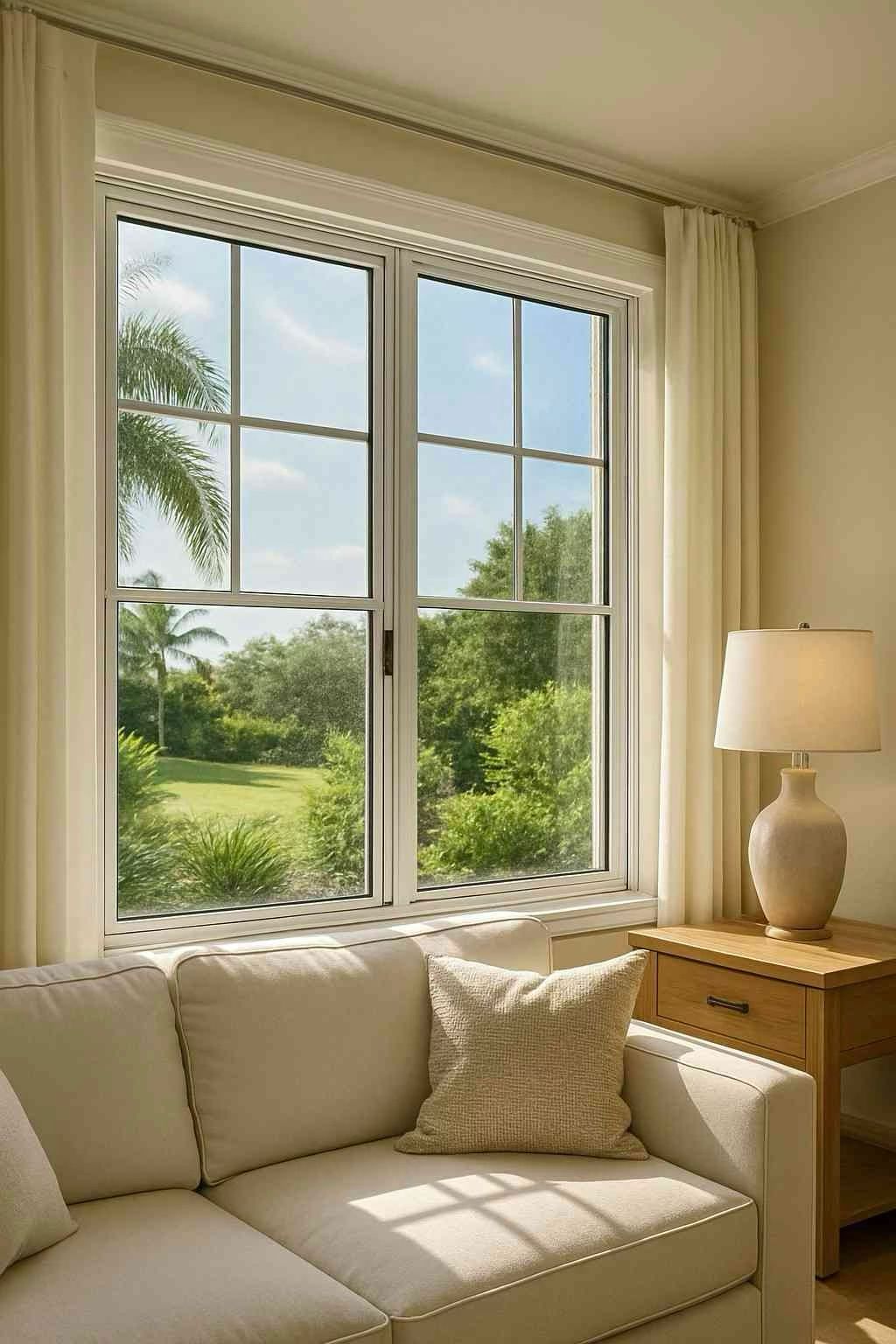
How Impact Glass, Laminated Interlayers, Window Construction, and Professional Installation Can Help Create a Quieter Florida Home
Florida homeowners often consider impact windows primarily for storm protection, but many are also interested in another potential benefit: reducing outside noise. Traffic, aircraft, construction, lawn equipment, neighbors, nightlife, and other environmental sounds can affect comfort inside a home.
Impact windows can often reduce the amount of outside sound that enters a home because of their laminated glass, tight construction, and improved sealing. However, they do not make a home completely soundproof. The amount of improvement depends on the exact glass configuration, frame, window style, air leakage, installation quality, wall construction, and the type of noise being addressed.
Understanding how sound travels and how window systems are rated can help homeowners set realistic expectations before replacing their windows.
Why Windows Matter for Noise Control
Exterior walls are made from several components, including wall framing or masonry, insulation, doors, windows, vents, and roof assemblies. Sound can enter through any weak point.
Windows are often a major pathway because glass is thinner than many wall systems and operable windows contain joints that must open and close.
Improving the window system can therefore make a noticeable difference, particularly when existing windows are thin, loose, poorly sealed, or single-pane.
How Impact Windows Can Reduce Noise
Impact windows are designed as strong, tightly assembled systems. Several features can also help reduce sound transmission.
- Laminated glass with a bonded interlayer.
- Multiple glass layers in many configurations.
- Insulating airspaces in some products.
- Substantial frames.
- Weatherstripping around operable sections.
- Improved seals compared with deteriorated older windows.
- Professional installation that limits gaps around the opening.
1. Laminated Glass Helps Dampen Sound
Impact glass commonly uses laminated construction. Two pieces of glass are bonded to a durable interlayer that helps keep the glass together if it breaks.
That interlayer can also help damp vibrations that transmit sound through the glazing.
This is one reason laminated glass is frequently used in applications where both safety and sound control are important.
2. Different Glass Thicknesses Can Improve Acoustic Performance
Sound behaves differently at different frequencies. Glass panes with different thicknesses can respond differently to sound waves.
Some acoustic glazing systems intentionally use asymmetrical glass thicknesses to improve performance across a broader frequency range.
Not every impact window uses an acoustically optimized configuration, so homeowners concerned about noise should ask for the specific sound ratings of the proposed product.
3. Insulating Glass Can Add Another Layer
Many modern impact windows use insulating glass units. These systems typically include multiple panes separated by a sealed airspace.
The additional pane and airspace can contribute to sound reduction, although the exact improvement depends on pane thickness, spacing, laminated construction, and other design details.
An insulating glass unit should be evaluated as a complete tested configuration rather than simply by counting the number of panes.
4. Tight Weatherstripping Reduces Sound Leaks
Sound can pass through small air gaps. Older windows may have worn weatherstripping, loose sashes, deteriorated seals, or gaps around moving parts.
A well-designed replacement window with effective weatherstripping can reduce these air paths.
This can improve both acoustic comfort and air leakage performance.
5. Proper Installation Is Essential
A high-performance window cannot deliver its intended acoustic benefit if significant gaps remain between the frame and wall.
Installation should address anchoring, shimming, perimeter joints, sealants, and water management while following the approved product documentation.
For noise reduction, careful treatment of the perimeter is especially important because sound can travel through unsealed gaps.
Impact Windows Are Not the Same as Soundproof Windows
The term soundproof can create unrealistic expectations. No residential window can eliminate every exterior sound.
Impact windows are primarily engineered for structural and impact performance. Noise reduction can be an important secondary benefit, but acoustic performance varies widely among products.
If noise is a major project objective, homeowners should compare tested acoustic ratings rather than assuming every impact window performs the same.
Understanding STC Ratings
STC stands for Sound Transmission Class. It is a commonly used rating that summarizes how well a building component reduces airborne sound across a range of frequencies.
In general, a higher STC rating indicates greater sound reduction under the test conditions.
STC is useful for comparing products, but it does not perfectly represent every real-world noise source.
Understanding OITC Ratings
OITC stands for Outdoor-Indoor Transmission Class. It is designed to evaluate sound transmission from exterior noise sources and includes lower-frequency sounds that are common in traffic and aircraft noise.
For homeowners concerned about highways, trains, aircraft, or other outdoor noise, OITC can be especially useful.
Ask manufacturers or contractors whether STC, OITC, or other acoustic test data are available for the exact window configuration.
Why Low-Frequency Noise Is Harder to Block
Low-frequency sounds, such as heavy trucks, bass music, aircraft, and some mechanical equipment, can be more difficult to reduce than higher-frequency sounds.
These sound waves can also travel through walls, roofs, doors, and structural components.
A window upgrade may improve comfort without completely eliminating low-frequency vibration or rumble.
Common Florida Noise Sources
- Highway and street traffic.
- Aircraft and airport activity.
- Trains.
- Construction.
- Lawn equipment.
- Pool equipment.
- Generators and mechanical systems.
- Neighbors and outdoor entertainment.
- Restaurants and nightlife.
- Boats and marine activity.
- Emergency vehicles.
- Wind and heavy rain.
Traffic Noise
Traffic includes a mix of tire noise, engines, horns, motorcycles, and low-frequency truck sounds.
Laminated and insulating glass configurations can reduce much of this noise, but the final result depends on the window rating and the rest of the building envelope.
Homes directly beside major roads may require a more comprehensive acoustic strategy.
Aircraft Noise
Aircraft noise can contain powerful low-frequency components and can enter through windows, walls, roofs, doors, and vents.
Impact windows with strong acoustic ratings may provide meaningful improvement, but homeowners near airports should pay particular attention to OITC data and whole-building sound paths.
Construction and Neighborhood Noise
Impact windows can help reduce voices, tools, lawn equipment, and general neighborhood activity.
The perceived improvement may be particularly noticeable when replacing old single-pane windows or windows with poor seals.
Rain and Storm Noise
Florida’s heavy rain can create significant sound on glass, metal, roofs, and exterior surfaces.
Laminated and multi-pane window construction may change how exterior rain noise is perceived indoors, but roof and wall construction also play a major role.
Window Style Can Affect Noise Performance
Different operating styles seal in different ways.
Casement and awning windows often use compression seals when closed. Single-hung and horizontal sliding windows rely on sliding seals and tracks.
This does not mean one style is always acoustically superior, because product engineering varies. Compare tested ratings for the exact model.
Fixed Windows Can Be Effective for Noise Control
Fixed windows do not open and therefore have fewer operable joints.
This can allow very tight construction and strong acoustic performance in some product lines.
However, fixed windows are not suitable where ventilation or emergency egress is required.
Frame Material and Noise
Aluminum, vinyl, fiberglass, wood, and composite frames can all be used in windows with good acoustic performance.
The frame material alone does not determine how quiet a window will be.
Frame design, chambers, reinforcement, seals, glazing, and installation are more useful factors to evaluate.
Impact Glass vs. Standard Single-Pane Glass
Older Florida homes may still have standard single-pane windows. These can provide relatively limited resistance to outside sound, especially if frames and seals have deteriorated.
Replacing them with a modern impact window can create a noticeable change because the new assembly may include laminated glass, additional panes, better seals, and a tighter frame.
The exact improvement should be evaluated using product test data when noise reduction is a major goal.
Impact Glass vs. Standard Double-Pane Glass
A standard double-pane window can provide useful thermal and acoustic performance, but it does not automatically have the same acoustic characteristics as laminated impact glazing.
The interlayer in laminated glass can help damp vibration. However, a specially designed non-impact acoustic window may outperform some basic impact configurations.
Always compare the complete tested systems.
Does Thicker Glass Always Mean Quieter Windows?
Not necessarily. Thickness can affect acoustic performance, but sound control depends on the relationship among glass thickness, pane spacing, laminated layers, frame construction, seals, and frequency.
An acoustically engineered configuration may use different pane thicknesses rather than simply making every pane thicker.
The Importance of Air Leakage
A small opening can allow a surprising amount of sound to pass through.
For this reason, a window with strong glass but poor seals may perform worse than expected.
Weatherstripping, sash alignment, frame joints, and perimeter installation all contribute to acoustic performance.
Walls Can Become the Weak Link
Once windows are improved, sound may still enter through walls, doors, attic spaces, vents, or other openings.
In masonry Florida homes, the wall may already provide substantial mass, making windows a major weak point. In other construction types, wall assemblies may transmit more sound.
For severe noise problems, a building or acoustic professional may need to evaluate the entire room.
Exterior Doors Matter Too
A room with upgraded impact windows may still experience substantial noise through a lightweight or poorly sealed exterior door.
Homeowners seeking comprehensive noise reduction should inspect door construction, weatherstripping, thresholds, and glass inserts.
Noise Can Travel Through Vents
Bathroom exhaust vents, kitchen vents, attic vents, air-conditioning penetrations, and other openings can provide sound paths.
These systems must still meet ventilation and safety requirements, so they should not simply be sealed to reduce noise.
A qualified professional can help identify appropriate solutions.
How Much Quieter Will the House Become?
There is no universal percentage that applies to every home.
The perceived improvement depends on the existing windows, new window ratings, noise source, room construction, installation, and listener sensitivity.
A homeowner replacing loose single-pane windows may notice a much larger change than someone replacing relatively modern insulated windows.
Why Decibel Claims Should Be Treated Carefully
Marketing materials sometimes describe noise reduction using a specific number of decibels or a percentage.
Those claims may be based on particular laboratory configurations and conditions.
Ask for the test standard, exact product configuration, and acoustic rating before assuming the same result will occur in a specific home.
Noise Reduction and Hurricane Protection Can Work Together
Florida homeowners do not necessarily need to choose between storm protection and acoustic comfort.
Many impact window systems provide both structural performance and meaningful noise reduction.
The best choice depends on selecting a product that meets the required hurricane performance while also providing appropriate acoustic ratings for the homeowner’s goals.
Noise Reduction and Energy Efficiency
Features that improve energy performance do not always correspond directly with acoustic performance, but some window designs can provide both.
Insulating glass, low air leakage, quality frames, and good installation can support energy efficiency, while laminated glass and carefully designed pane combinations can improve sound control.
Review both energy and acoustic ratings when both goals matter.
Noise Reduction and Security
Laminated impact glass is designed to remain together after breakage, which can also create an additional barrier against forced entry compared with ordinary glass.
Security and acoustic performance are separate considerations, but both can benefit from strong laminated glazing and well-constructed frames.
Coastal Considerations
Coastal homeowners should not select a window based only on sound performance.
Salt exposure, corrosion resistance, impact requirements, design pressure, hardware, finish, and maintenance must also be considered.
The best product should address both the acoustic goal and the environmental demands of the property.
Installation Details That Can Affect Noise
- Gaps between the frame and opening.
- Incomplete perimeter sealing.
- Poorly fitted shims.
- Damaged weatherstripping.
- Misaligned operable panels.
- Unsealed joints around mullions.
- Improperly installed exterior trim.
- Open penetrations near the window.
- Existing wall cracks or construction defects.
How to Compare Impact Windows for Noise Reduction
If reducing outside noise is an important reason for replacing windows, ask for more than the basic impact rating:
- STC rating for the exact glass and frame configuration.
- OITC rating when available.
- Glass thickness and laminated construction.
- Whether the unit uses insulating glass.
- Air leakage rating.
- Window operating style.
- Frame and weatherstripping design.
- Approved maximum sizes.
- Installation details.
- Warranty coverage.
Questions to Ask Your Window Contractor
- Which impact window configuration offers the best acoustic performance for my budget?
- Do you have STC or OITC data for this exact product?
- Is the acoustic rating for the entire window or only the glass?
- How does this option compare with my existing windows?
- Will the proposed product also meet my required impact and design pressure ratings?
- How will perimeter gaps be sealed during installation?
- Are there other obvious sound paths in the room?
- Would a different window style improve sealing?
- Are there special options for traffic or aircraft noise?
Common Mistakes When Buying Windows for Noise Reduction
- Assuming all impact windows reduce noise equally.
- Looking only at glass thickness.
- Ignoring STC and OITC ratings.
- Comparing glass-only ratings with whole-window ratings.
- Ignoring air leakage.
- Overlooking installation quality.
- Expecting complete soundproofing.
- Ignoring doors, walls, vents, and roof paths.
- Choosing an acoustic product without verifying hurricane requirements.
- Relying on broad marketing percentages without test data.
Can Existing Impact Windows Be Improved for Noise?
If existing impact windows are in good condition but noise seems excessive, first inspect for maintenance issues.
Worn weatherstripping, damaged seals, misalignment, hardware problems, or perimeter gaps may increase sound transmission.
Repairs should preserve the approved impact assembly. Do not add unapproved glass, films, or modifications without confirming compatibility.
When Full Window Replacement May Make Sense
Replacement may be worth considering when existing windows are old, single-pane, poorly sealed, difficult to operate, damaged, or unable to meet current storm and comfort goals.
A new impact system can address several objectives at once, including storm protection, noise reduction, security, appearance, and energy performance.
The value of replacement depends on the condition of the existing windows and the homeowner’s priorities.
Frequently Asked Questions
Do impact windows really reduce outside noise?
They can. Laminated glass, multiple panes, tighter frames, and improved seals can reduce sound transmission. The amount of improvement varies by product and home.
Will impact windows completely soundproof my house?
No. They can reduce outside noise, but sound can still travel through walls, doors, roofs, vents, and other building components.
Are impact windows good for traffic noise?
Many impact configurations can help with traffic noise. If traffic is the primary concern, compare OITC ratings and ask about glass configurations designed for exterior noise.
Are impact windows good for airplane noise?
They may provide meaningful improvement, but aircraft noise can include difficult low frequencies. Review OITC data and consider a whole-building acoustic evaluation for severe exposure.
Is laminated glass better for sound reduction?
Laminated glass can provide strong acoustic benefits because the interlayer helps damp glass vibration. Performance still depends on the complete window configuration.
Does double-pane mean better soundproofing?
Not automatically. Pane thickness, spacing, laminated layers, frame seals, and installation all matter. Compare tested acoustic ratings.
What rating should I look for?
STC and OITC are commonly used acoustic ratings. OITC can be particularly useful for outdoor transportation noise. The appropriate target depends on the existing home and noise source.
A Quieter Home Can Be an Added Benefit of Impact Windows
Impact windows are primarily selected in Florida for storm protection, but their construction can also provide a valuable improvement in everyday comfort.
Laminated glass, multiple panes, tight seals, quality frames, and professional installation can reduce the amount of traffic, neighborhood, aircraft, and other exterior noise that enters a home.
Patriot Windows & Doors helps Florida homeowners compare impact-resistant window and door systems based on storm protection, energy performance, appearance, and comfort. If noise reduction is an important goal, the right approach is to compare the acoustic ratings of the exact products being considered and make sure installation is completed carefully.
Note: This article is for general informational purposes only. Acoustic performance, impact ratings, product approvals, energy ratings, installation requirements, warranties, and building code requirements vary by product, location, and project. Laboratory ratings do not guarantee identical results in every home. Consult qualified contractors, manufacturers, acoustic professionals, design professionals, and local authorities as appropriate.